
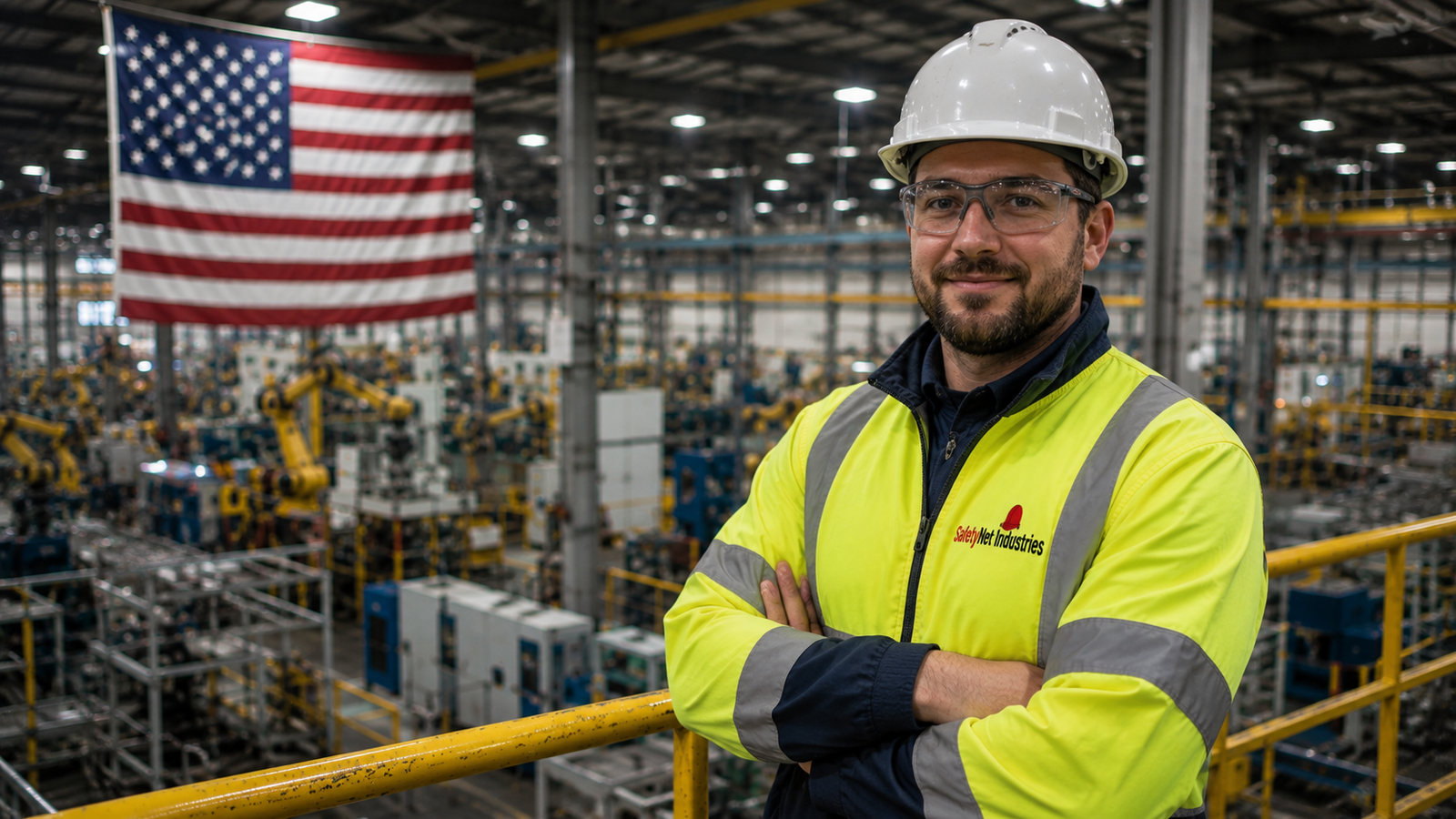
Every day, millions of people across the United States enter industrial workplaces. They operate in warehouses, chemical plants, logistics hubs, and production facilities that keep the economy moving. But behind this daily activity lies a hard reality: safety is never guaranteed. According to data from the , more than three million work-related incidents occur in the United States every year. These are not just numbers. They represent real people—operators, drivers, warehouse workers, technicians—facing risks as part of their daily work.
Even in highly regulated environments, incidents remain a constant challenge.
The real question is not whether incidents happen. The real question is: how prepared is your organization?
The Reality Behind Industrial Incidents
Incidents rarely occur because of a single mistake. In most cases, they are the result of a chain of small failures coming together at the wrong moment.
A lack of training. Unclear procedures. Time pressure. Miscommunication. These are common factors in almost every industrial environment.
What many organizations underestimate is that most incidents are predictable. Not in their exact form, but in their underlying causes. Improper handling of hazardous materials, errors during loading and unloading, or failure to recognize explosive atmospheres are all well-known risk patterns.
And what is predictable can be prevented.
Why Incidents Continue to Happen
Despite technological advances and stricter regulations, incident numbers remain high—especially in large and complex economies like the United States.
One reason is the increasing complexity of industrial operations. Supply chains are global, regulations vary by region, and employees are exposed to constantly changing processes and materials.
Another factor is human behavior. Even in well-organized companies, mistakes happen. Fatigue, routine, and a lack of awareness play a larger role than many organizations expect.
And finally, there is a structural issue: safety training is still too often treated as a requirement, rather than a strategic investment.
Moving Beyond Compliance
Many companies focus on meeting regulatory requirements. While this is essential, it is only the starting point.
Compliance represents the minimum standard. True safety goes beyond that.
The difference lies in awareness and behavior. Employees must not only know what to do, but understand why it matters. They need to recognize risks before they escalate.
This is where targeted training and structured safety systems make a real difference. Not as a one-time activity, but as part of an ongoing safety culture.
The Role of Training in Preventing Incidents
Experience and data consistently show that well-trained employees make fewer mistakes. They identify risks earlier, respond more effectively in critical situations, and take ownership of safety.
Training programs such as ADR Awareness, IMDG Awareness, and ATEX Awareness are not formalities. They form the foundation for safe operations in environments involving hazardous materials and industrial risks.
When employees understand the consequences of unsafe actions, behavior changes. Safety becomes part of how they work—not just something they follow.
Where Things Often Go Wrong
In many organizations, the same challenges appear repeatedly. Procedures exist, but are not fully understood. Training has been completed, but not applied. Responsibilities are defined, but unclear in practice.
Companies also struggle with visibility. Who is trained? Where are the risks? Is the organization still compliant with current regulations?
Without structure and insight, safety remains reactive instead of proactive.
The True Cost of a Single Incident
An incident is never just a moment in time. Its consequences extend far beyond the event itself.
Injuries, operational downtime, reputational damage, and legal consequences are all potential outcomes. In severe cases, a single incident can disrupt business continuity for months—or even permanently.
Even smaller incidents carry hidden costs. They impact productivity, consume resources, and weaken trust within the organization.
Prevention is always more cost-effective than recovery.
How Your Organization Can Reduce Risk
The first step is awareness. Understanding the scale of industrial incidents—not only within your own company, but globally.
The second step is investment in knowledge. Ensure that employees are properly trained and remain up to date. Not once, but continuously.
The third step is structure. Implement systems, audits, and controls that provide visibility and demonstrate compliance.
SafetyNet: From Risk to Control
At SafetyNet, we believe safety starts with insight.
Our training programs, audit tools, and compliance solutions are designed for real industrial environments. We focus on clarity, usability, and practical application.
Whether your challenges involve hazardous materials, storage, transport, or process safety, we help you understand and manage your risks.
The Numbers Are Clear. What Will You Do With Them?
More than three million industrial incidents per year in the United States alone. This is not an exception—it is the reality of modern industry.
The question is not whether your organization will face risks. The question is how well you are prepared to manage them.
Take Action Today
If you want to reduce risks and ensure compliance with regulations, now is the time to act.
Train your workforce. Gain control over your risks. Build a stronger safety culture.
👉 Discover our training programs and safety tools and take the next step toward a safer organization today.